
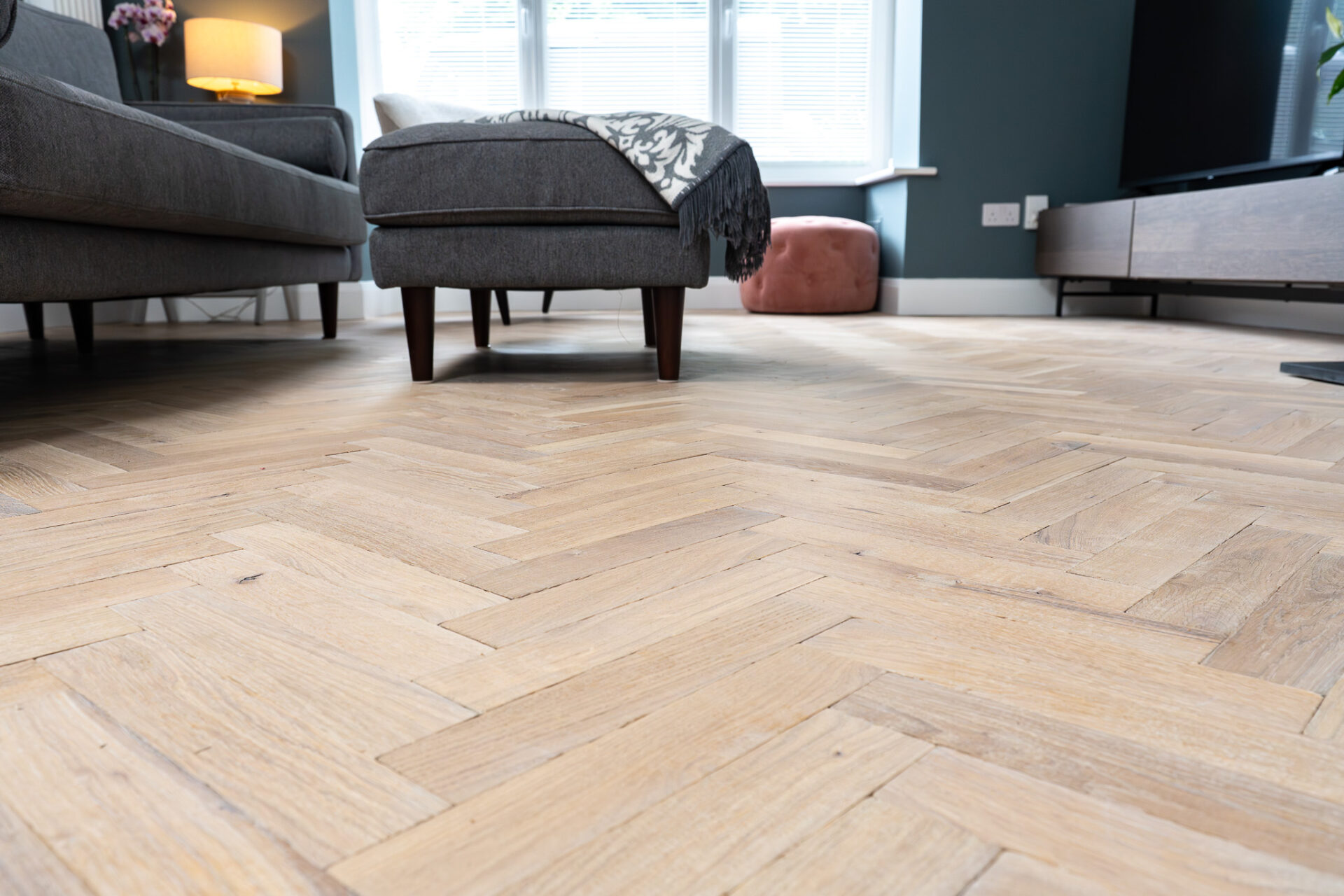
Wood flooring moves. It expands when humid, contracts when dry, and reacts to temperature changes. This natural behaviour affects how well flooring performs in your home. Solid wood and hardwood flooring respond differently to these conditions, which matters more than most people realise when choosing flooring. Understanding stability differences helps you avoid problems that only emerge months after installation.
How Wood Responds to Moisture
All timber absorbs and releases moisture based on surrounding humidity levels. When air is damp, wood swells as it takes on moisture. When air is dry, wood shrinks as moisture evaporates from it. This constant movement is inherent to wood as a natural material – you can’t eliminate it completely, only manage it through construction and installation methods.
Solid wood flooring responds to moisture changes throughout its entire thickness. When humidity rises, the entire plank swells. When conditions dry out, the whole board contracts. This movement happens across the width of boards, which is why you sometimes see gaps appear between planks in winter when heating systems dry out indoor air, then close up again in more humid months.
Hardwood flooring’s layered construction behaves differently. The plywood base is made from multiple thin wood layers glued with grain running in alternating directions. This cross-grain construction counteracts natural wood movement. The top wood layer still wants to expand and contract, but the plywood base restricts this movement considerably. The result is flooring that stays more dimensionally stable across humidity changes.
Temperature Effects
Temperature affects wood flooring both directly and indirectly. Direct heat dries out wood, making it contract. Cold allows wood to absorb more moisture from the air. But temperature’s bigger impact comes through how it affects humidity – warm air holds more moisture than cold air, which is why rooms feel more humid in summer and drier in winter even if actual moisture levels haven’t changed dramatically.
Solid wood flooring in rooms with significant temperature swings experiences this movement more dramatically. Conservatories that get very hot in summer then cold in winter put solid wood through extreme cycles of expansion and contraction. Over time, this can cause warping where boards develop permanent bows or cups that don’t flatten out when conditions stabilise.
Hardwood flooring handles temperature variation better due to its more stable construction. The plywood core doesn’t expand and contract as much as solid timber, which means the floor maintains its shape more consistently. This makes hardwood flooring the better choice for rooms with large windows, glazed extensions, or any space where temperature fluctuates significantly throughout the year.
Geographic Considerations
Ireland’s climate presents specific conditions for wood flooring. Humidity levels fluctuate throughout the year, and homes cycle between heated and unheated periods. Coastal properties face higher humidity generally. These conditions affect how flooring performs and which type suits different locations.
Solid wood flooring works well in Irish homes with stable heating and humidity control. Modern well-insulated homes with consistent indoor climates suit solid wood perfectly. Older properties with less climate control might see more seasonal movement, though solid wood still performs adequately with proper installation.
Hardwood flooring’s stability advantage matters more in properties with variable conditions – holiday homes that sit empty between uses, rental properties with inconsistent heating patterns, or older buildings where humidity control is difficult. The more stable construction handles these variations more gracefully than solid wood.
Long-Term Stability
Both flooring types remain stable long-term when installed correctly in appropriate conditions. Stability issues typically emerge from installation in unsuitable locations rather than inherent problems with either flooring type. Solid wood in rooms with stable conditions stays flat and gap-free for decades. Hardwood flooring in challenging conditions outperforms solid wood significantly.
The key is matching flooring type to your specific circumstances. Solid wood works brilliantly where conditions suit it. Hardwood flooring excels where conditions challenge solid wood. Neither option is universally superior – they’re suited to different situations, and choosing appropriately matters more than which one is “better” in abstract terms.
Need help determining which flooring type suits your specific rooms and conditions? Madison Flooring can assess your property circumstances and recommend appropriate flooring options. We consider your subfloor type, whether you have underfloor heating, room temperature variations, and humidity factors. Visit our Kildare showroom to discuss your specific situation, call 045 831 900, or contact us online.